Trust on the Move: How Technology and Safety Innovations are Transforming Bus Travel in India
 By Sanjay Jadhav
July 2, 2026
By Sanjay Jadhav
July 2, 2026
By- Prashant Kumar, Co-founder zingbus
For millions of Indians, the intercity bus is not just a mode of transport. It connects people to work, education, families, pilgrimages, and holidays across routes that other modes often do not serve efficiently. It remains one of the most democratic forms of mobility in the country.
Yet, for all its importance, bus travel has not always enjoyed the trust it deserves. For many passengers, especially on long-distance and overnight routes, the concerns are familiar: Will the bus arrive on time? Is the boarding point safe and verified? Can my family track the journey? Is the driver being monitored? What happens if something goes wrong on the road?
These questions are shaping the next phase of intercity mobility in India. Travellers still seek affordability and convenience, but they are also demanding safety, reliability, transparency, and predictability. The future of bus travel will depend on how well operators answer these expectations through systems that passengers can see and trust.
One of the most visible shifts has been the move towards connected, app-based bus experiences. Real-time tracking, digital ticketing, boarding information, route updates, and support access have made intercity travel more transparent. For those travelling long distances or overnight, this goes beyond convenience. It reduces uncertainty, gives passengers control, and keeps families informed from departure to arrival.
Safety is another area where technology is changing expectations. Advanced GPS systems, driver behaviour monitoring, speed control systems, and centralised control centres are helping operators maintain stronger standards. This matters because safety can no longer depend only on intent. It must be built into operations, monitored consistently, and supported by data.
Data-led systems are also making bus operations more accountable. Route performance, vehicle movement, driver behaviour, halt patterns, traffic, weather, and customer feedback can provide early signals that help operators act faster. With AI and predictive analytics, these signals can be used to plan schedules better, reduce delays, and improve reliability.
This is where technology moves beyond convenience and becomes operational discipline, making services safer, more dependable, and more transparent. It also creates an important shift. Passengers no longer have to depend only on booking-time promises. They can experience accountability through real-time updates, clearer communication, visible safety measures, and better service recovery.
Women travellers, in particular, are influencing how transport services are designed and evaluated. Safety and comfort are no longer secondary expectations. They are central to the travel decision. This shift is already visible on zingbus, where nearly 1 in 3 travellers is a woman.
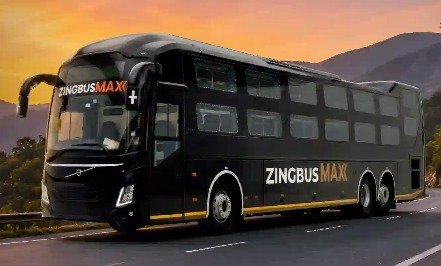
Measures such as verified boarding points, emergency support systems, live journey tracking, trained crew, and better visibility across journeys have become essential for women travellers. Trained crew provides first aid and emergency response support, along with sensitivity and care for women, elderly passengers, and those travelling with infants. On Maxx, women account for 40 per cent of all ridership, reflecting stronger adoption of premium travel experiences. A transport system that gives women greater confidence to travel also supports wider economic and social mobility.
Sustainability is also becoming part of this technology-led shift. Intelligent routing, electrification of fleet, fuel-efficiency systems, and data-led fleet management can help make operations more efficient and sustainable. As India moves towards greener mobility, technology will shape not just cleaner vehicles, but also how fleets are planned, deployed, and operated.
The future of bus travel in India will go beyond moving people from one point to another. It will be defined by how safe, visible, reliable, and accountable the journey feels.
In an age where travellers value transparency, safety, and convenience alongside affordability, technology-led innovation is helping redefine bus travel for a new generation. The most successful mobility companies of the future will not use technology only to digitise bookings. They will use it to make travel safer, more reliable, and more trustworthy. For India’s intercity bus ecosystem, trust is no longer just a brand promise. It is becoming an operational standard.